When to Replace Tyres in the UAE: The Signs a Technician Looks For
Quick answer
Replace your tyres when the tread is down to about 3 mm, when they are more than five years past their DOT date, or immediately if you see a bulge, deep cracks or exposed cords. The legal minimum tread is 1.6 mm, and the federal traffic fine for unfit tyres is AED 500 and 4 black points.
Key takeaways
- 1.6 mm is the legal minimum tread depth; 3 mm is the practical point to replace for safe wet braking.
- Tyres more than five years past their DOT date are commonly rejected at inspection in the UAE.
- A sidewall bulge cannot be repaired: the tyre must be replaced before the car is driven again.
- The federal traffic fine for unfit tyres is AED 500 and 4 black points.
- Wear on one edge only usually means an alignment problem that will ruin new tyres too.
Drivers usually call us for new tyres for one of three reasons: a puncture that cannot be repaired, a failed inspection, or a bulge they spotted while washing the car. In four years of fitting tyres around the UAE, I have found that very few people replace tyres because they measured the tread and decided it was time, and that is the reason most tyres stay on the car longer than they should.
This guide sets out the signs I check on every car: tread depth, age, cracks, bulges and uneven wear, plus what the law and the inspection centres expect. It ends with exactly how a Bridgestone tyre replacement works with us, so you know what to expect when the time comes.
When should you replace tyres in the UAE?
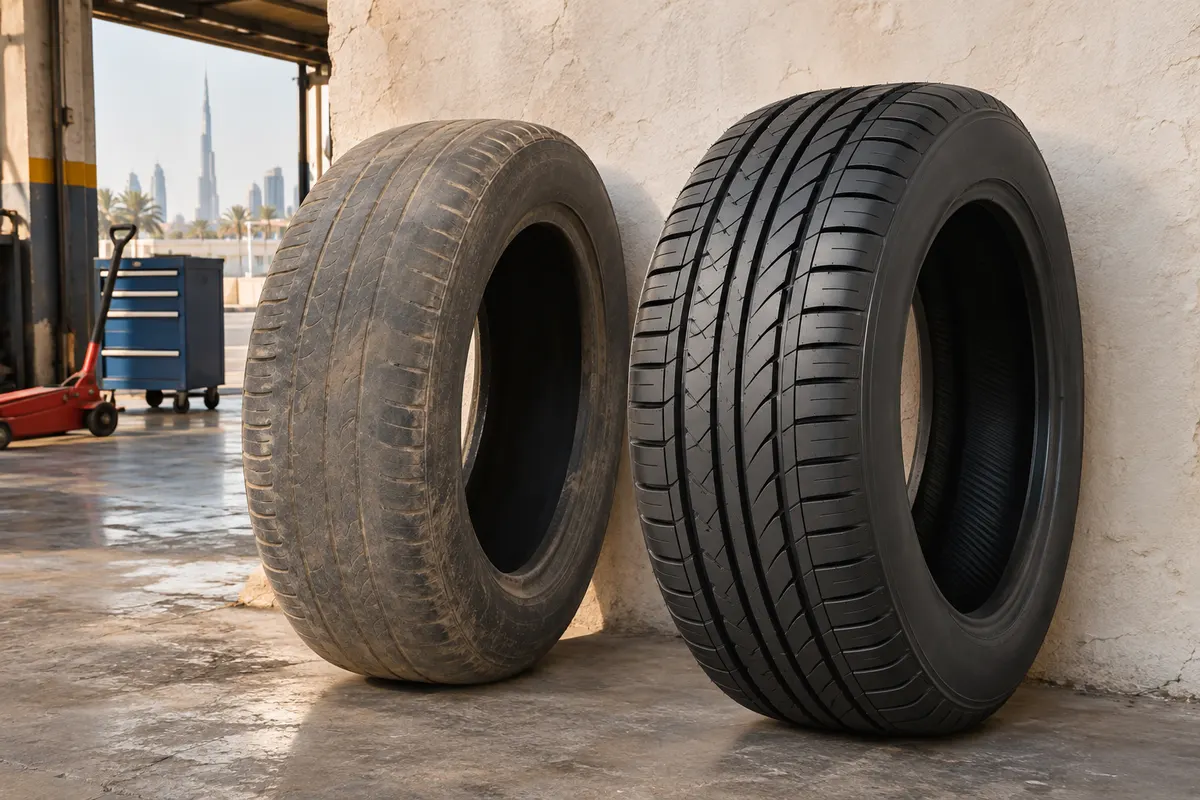
Replace a tyre when the first of four limits is reached: tread at about 3 mm, an age of five years from the DOT date, visible damage such as a bulge or exposed cords, or a puncture that cannot be repaired safely. Any one of them is enough on its own.
The order in which these limits arrive depends on how you use the car. A taxi-style daily commuter covering 30,000 km a year usually wears through the tread long before age is an issue. A second car that sits in a villa driveway in Arabian Ranches may reach five years with half its tread left.
That is why I always check both tread and DOT date together. If you want the background on mileage, how long Bridgestone tyres last in the UAE gives typical kilometre ranges for each range.
What is the minimum tread depth in the UAE?
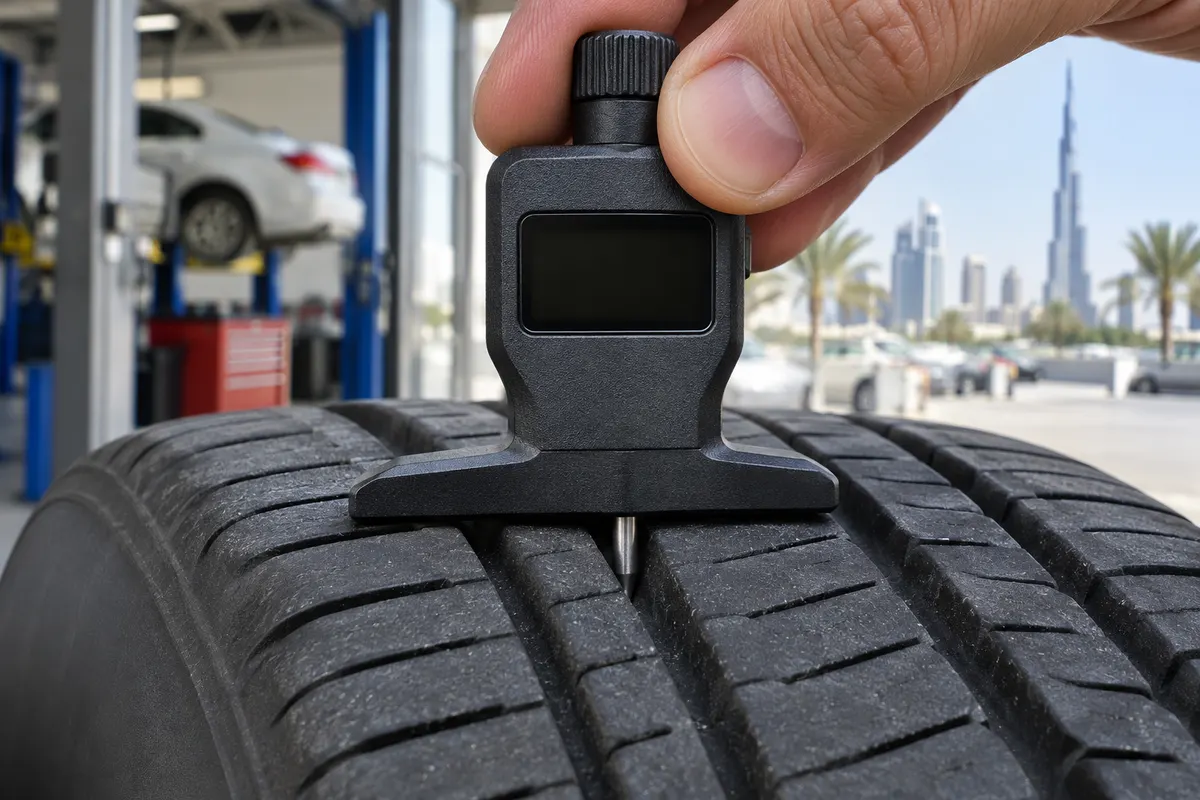
The minimum legal tread depth is 1.6 mm across the main grooves, but 3 mm is the point at which I advise replacing. A new Bridgestone car tyre typically starts with around 7–8 mm of tread, so 3 mm means most of the useful depth has gone.
The reason for the gap is water. Rain in the UAE is rare, but when it comes, the roads are slick with dust and oil, and the grooves are what clear water from under the tyre. Below about 3 mm, stopping distances on a wet E311 or Sheikh Zayed Road lengthen noticeably, and the risk of aquaplaning through standing water at underpasses rises.
For 4x4s that go onto sand, deeper tread also matters for traction. An all-terrain tyre that is down to 4 mm digs and floats far less well than it did when new.
| What you see | What it means | What to do |
|---|---|---|
| Tread above 4 mm, DOT under 4 years | Healthy tyre | Check pressure monthly |
| Tread at about 3 mm | Wet grip noticeably reduced | Plan replacement within weeks |
| Tread level with wear bars (1.6 mm) | Legal limit reached | Replace now |
| DOT date more than 5 years ago | Likely to be rejected at inspection | Replace, even with tread left |
| Bulge on the sidewall | Internal structure damaged | Do not drive; fit the spare or call us |
| Deep cracks or exposed cords | Rubber aged or worn through | Replace now |
| Wear on one edge only | Alignment or suspension fault | Fix alignment, replace if near limit |
| Puncture in shoulder or sidewall | Cannot be repaired safely | Replace the tyre |
How do you check tread depth yourself?
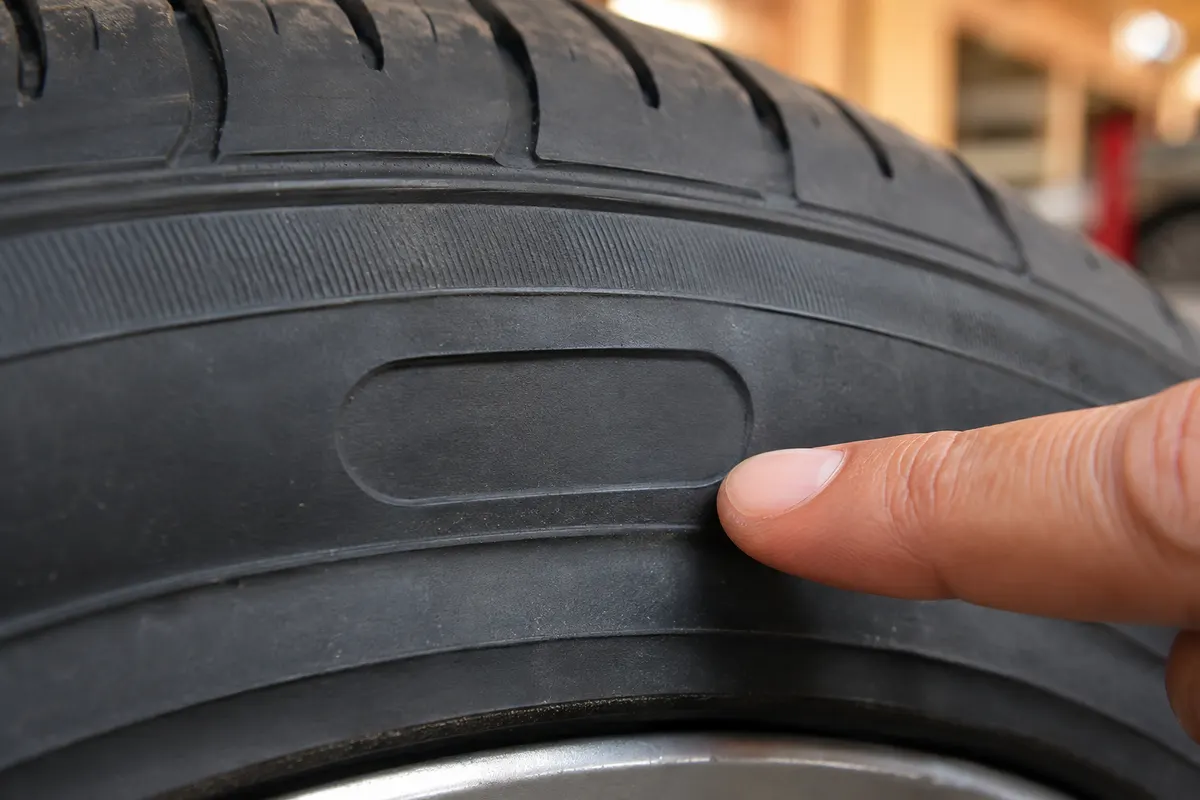
Every Bridgestone tyre has tread wear indicators: small raised bars across the bottom of the main grooves, set at 1.6 mm. When the surface of the tread is level with those bars, the tyre has reached the legal limit and must be replaced. Small triangles or the letters TWI on the shoulder show where the bars are.
To catch the 3 mm point, use a tread depth gauge; they cost very little and give a clear reading. Measure in the outer, centre and inner grooves at a few points around the tyre, because wear is often uneven.
The inner edge is the one people miss. On many cars, especially those with worn suspension or a knocked alignment, the inside shoulder wears out while the outside still looks good. Turn the steering to full lock and look at the inner half of each front tyre, or send us a photo and we will tell you what we see.
Do cracks and bulges mean you need new tyres?
A bulge on the sidewall means the internal structure has been damaged and the tyre must be replaced before the car is driven any further. It usually follows a hard hit on a kerb, a pothole or a speed bump taken too fast, and it can fail without warning at highway speed.
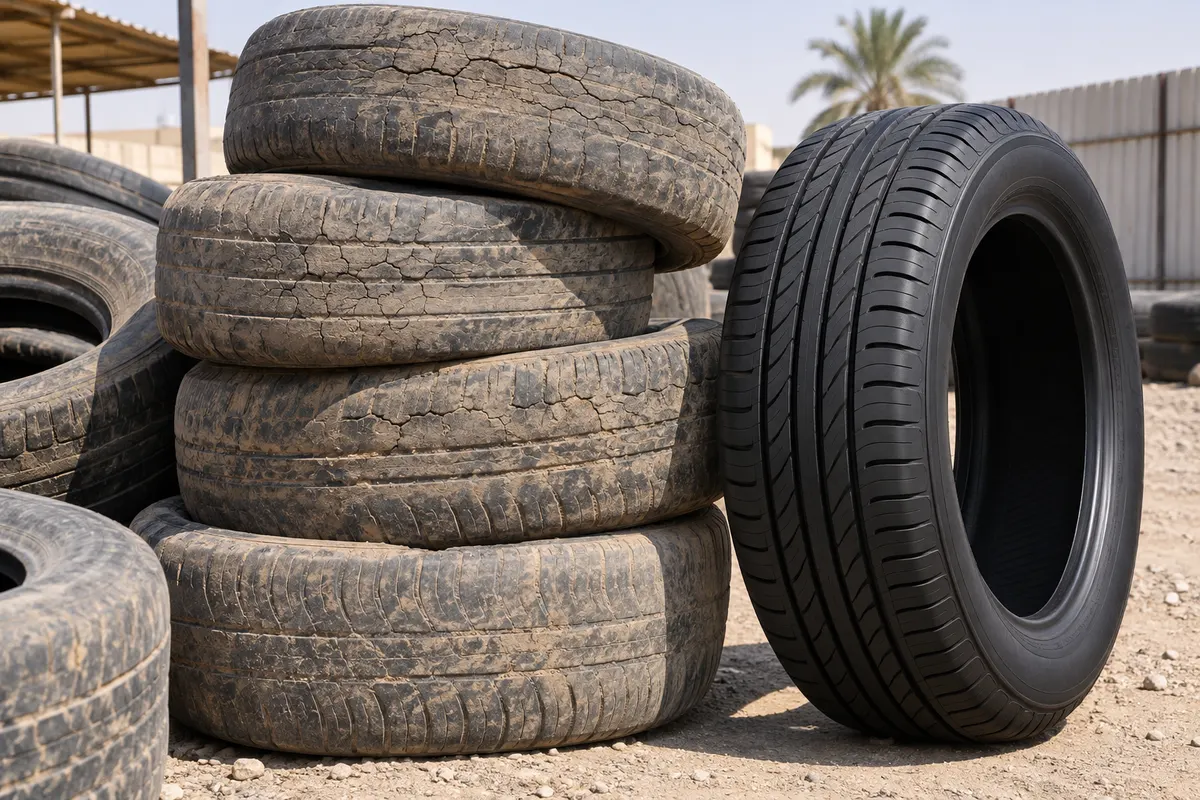
Cracks need judgement. Fine surface lines on the sidewall, often called weather checking, are common on UAE cars parked in the sun and are not always dangerous on their own. Cracks that you can open with a fingernail, cracks at the base of the tread grooves, or cracking combined with an old DOT date mean the rubber has aged and the tyre should go.
Other damage that rules out a repair includes exposed steel or fabric cords, a cut in the sidewall, or a puncture in the shoulder. A nail in the central tread area can often be fixed properly with a plug-patch through our puncture repair service, but sidewall and shoulder damage cannot.
How old is too old for tyres in the UAE?
Tyres more than five years past their DOT date are commonly rejected at inspection in the UAE, so five years is the age I work to for replacement. Most tyre makers, including Bridgestone, also say no tyre should stay in service beyond ten years from manufacture, whatever its condition.
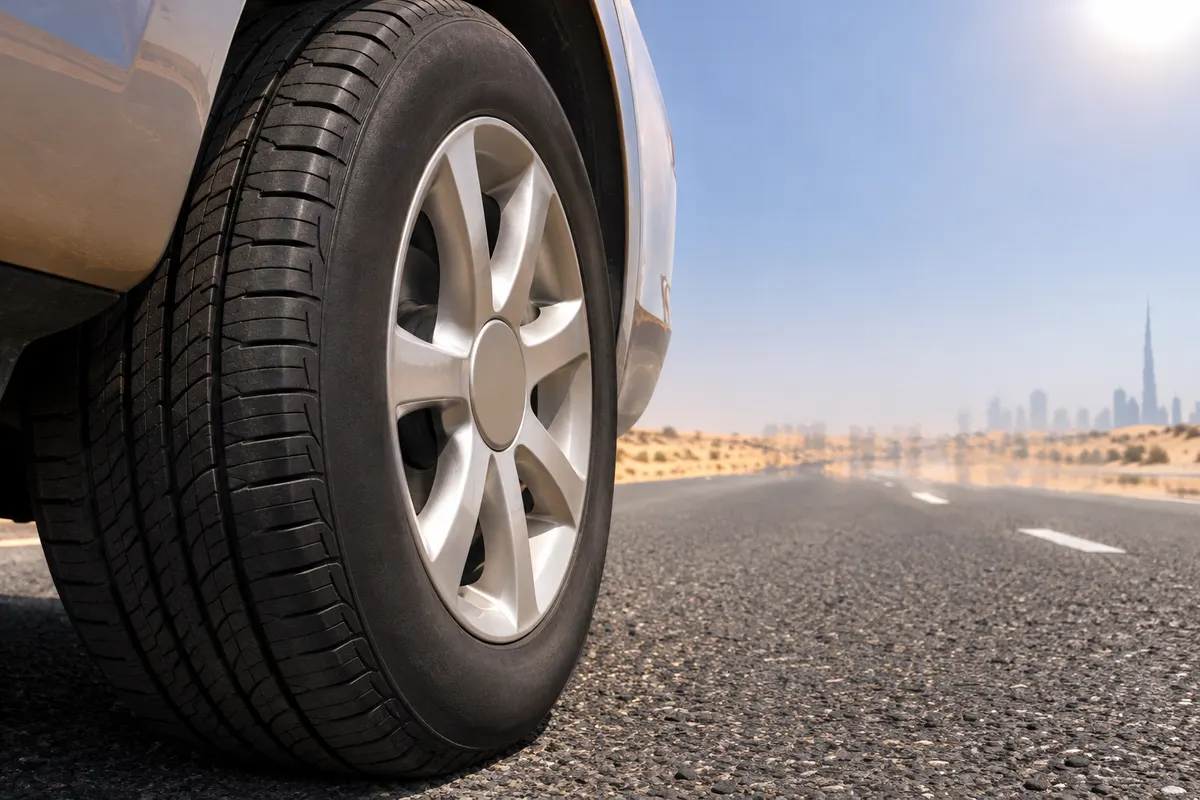
Heat is the reason the UAE limit feels shorter than in Europe. Months of 60–70°C road surfaces and strong UV harden the compound, so an old tyre gives less grip and is more prone to cracking and tread separation.
The date is the last four digits of the DOT code, read as week and year, so 2425 means week 24 of 2025. If you have never looked, how to read the Bridgestone DOT date code shows where to find it and how to read it.
What is the fine for bald or unfit tyres in the UAE?
The federal traffic fine for unfit tyres is AED 500 and 4 black points. Police can issue it at a checkpoint or after an incident, and worn or damaged tyres can also lead to a failed vehicle inspection, which means a second trip before registration renewal.
The fine is the smaller cost. A tyre that fails on the E11 at 120 km/h can cause a serious accident, and an insurer looking at a claim will check the condition of the tyres. Bald or badly aged tyres make that conversation harder.
For most drivers, a tyre replacement is a planned expense rather than an emergency, and it is far cheaper to plan it. A set of Bridgestone touring tyres can also be split into four interest-free payments; see Bridgestone tyres with Tabby or Tamara.
What other signs mean you need new tyres?
Uneven wear, new vibrations and repeated pressure loss are the signs drivers notice through the car rather than by looking. Each one has a cause worth fixing, and some mean the tyre is already past saving.
Wear on one edge points to alignment, which needs correcting before new tyres go on or they will wear the same way. Feathered or scalloped tread blocks often follow worn shock absorbers. A wheel alignment check costs far less than a pair of tyres worn out early.
Watch for these as well:
- A vibration at 100–120 km/h that balancing does not cure, often a separated belt
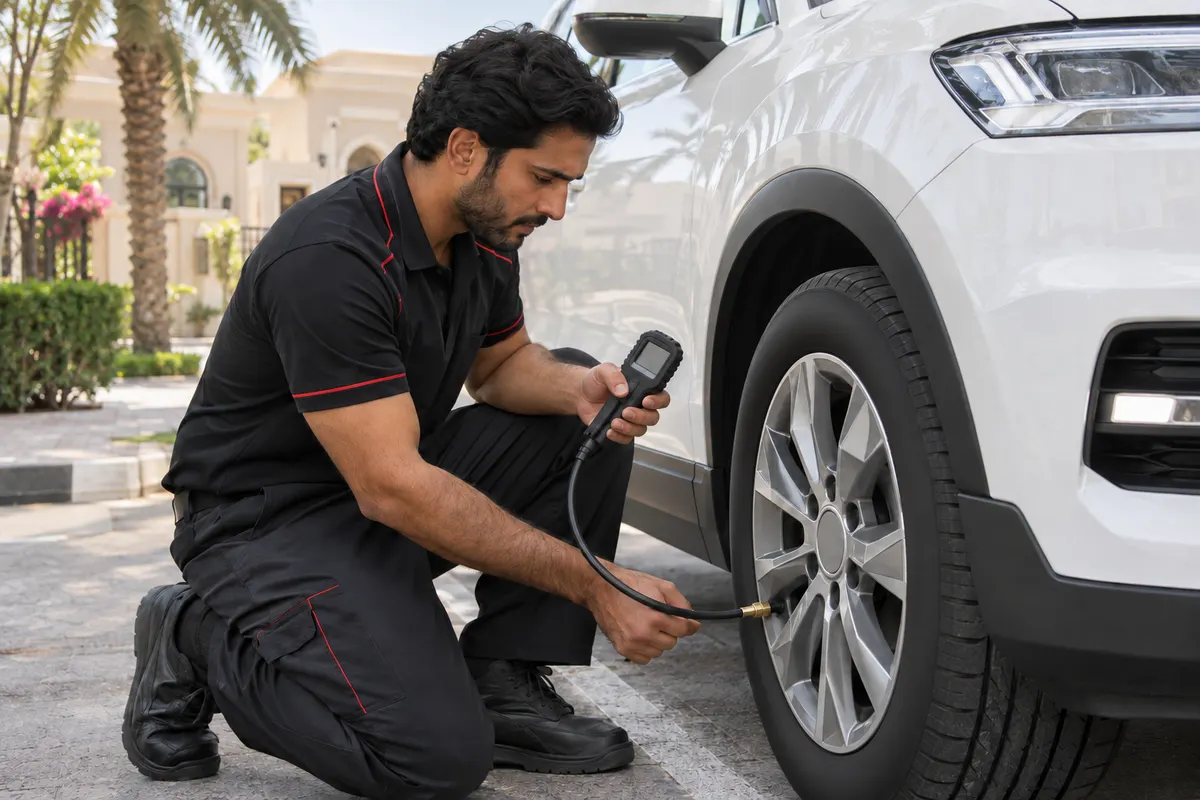
- A tyre that loses pressure every week despite no visible nail
- A loud hum that grows with speed, typical of cupped or uneven wear
- Repeated plug repairs close together in the same tyre
- Any tyre that has been driven flat, even for a short distance
How does a tyre replacement work with us?
A Bridgestone tyre replacement with us starts with a photo of your tyre size on WhatsApp and ends with new tyres fitted in your own parking space. We confirm the size, suggest the Bridgestone patterns that suit your car and driving, and send the tyre price before anything is booked.
As a guide, a Bridgestone Turanza 6 for a Camry or Accord in 215/55 R17 is typically around AED 500–650 per tyre, a value Ecopia EP150 in 185/65 R15 starts from around AED 280, and a Dueler H/T 684 II for a Prado in 265/65 R17 is typically around AED 650–850. Exact prices depend on size and stock and are confirmed on WhatsApp.
The van usually arrives within 30–60 minutes inside city areas, 24 hours a day. Fitting labour starts from AED 100 per visit and covers removal, a new valve, mounting, balancing on the van, torque to spec, pressure set to the door placard and disposal of the old tyres. Before any tyre goes on, the technician shows you its DOT date. You can pay by card, cash, Apple Pay, Tabby or Tamara. Full details for the city are on Bridgestone tyre replacement in Dubai.