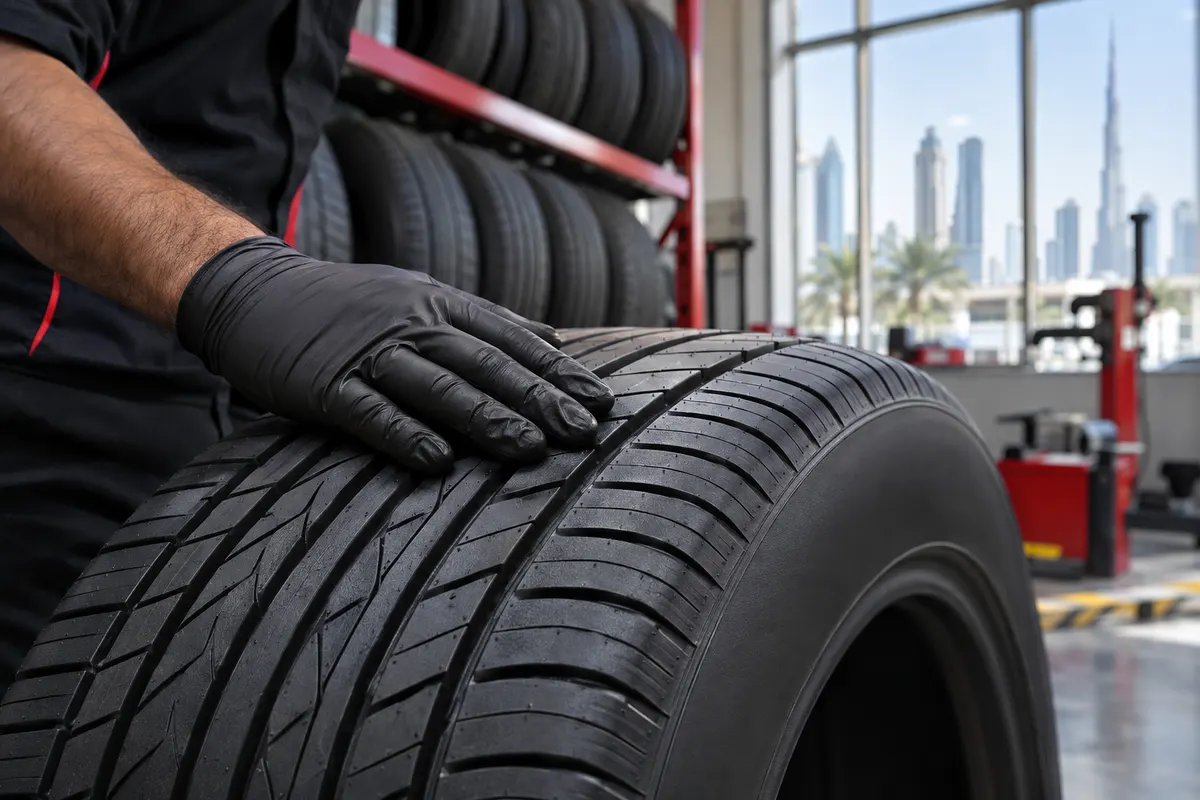
Bridgestone run-flat tyres explained: RFT, DriveGuard and what UAE drivers need to know
Quick answer
Bridgestone run-flat tyres let you keep driving after a puncture, typically up to about 80 km at no more than 80 km/h. RFT tyres use reinforced sidewalls and are fitted from the factory on many BMW and MINI models. DriveGuard brings run-flat ability to cars sold on ordinary tyres, but both need a working TPMS.
Key takeaways
- Run-flat tyres support the car on reinforced sidewalls after air loss, typically for about 80 km at up to 80 km/h, depending on load.
- RFT is for cars engineered around run-flats (many BMW, MINI and some Mercedes); DriveGuard suits ordinary cars with a TPMS.
- A working tyre pressure monitoring system is essential, because you may not feel a run-flat lose air.
- Most tyre and car makers advise against repairing a run-flat that has been driven deflated.
A good share of the call-outs our vans get in Dubai are BMWs with a warning light on the dash and no spare in the boot. The owner has often driven for days without noticing anything, because the run-flat tyre kept the car level. That is the technology working as intended, and also the reason run-flats need a little more understanding than a normal tyre.
This guide explains how Bridgestone Run-Flat Technology (RFT) and Bridgestone DriveGuard differ, which cars need them, what TPMS has to do with it, and the honest answer on repairs.
What is a Bridgestone run-flat tyre?
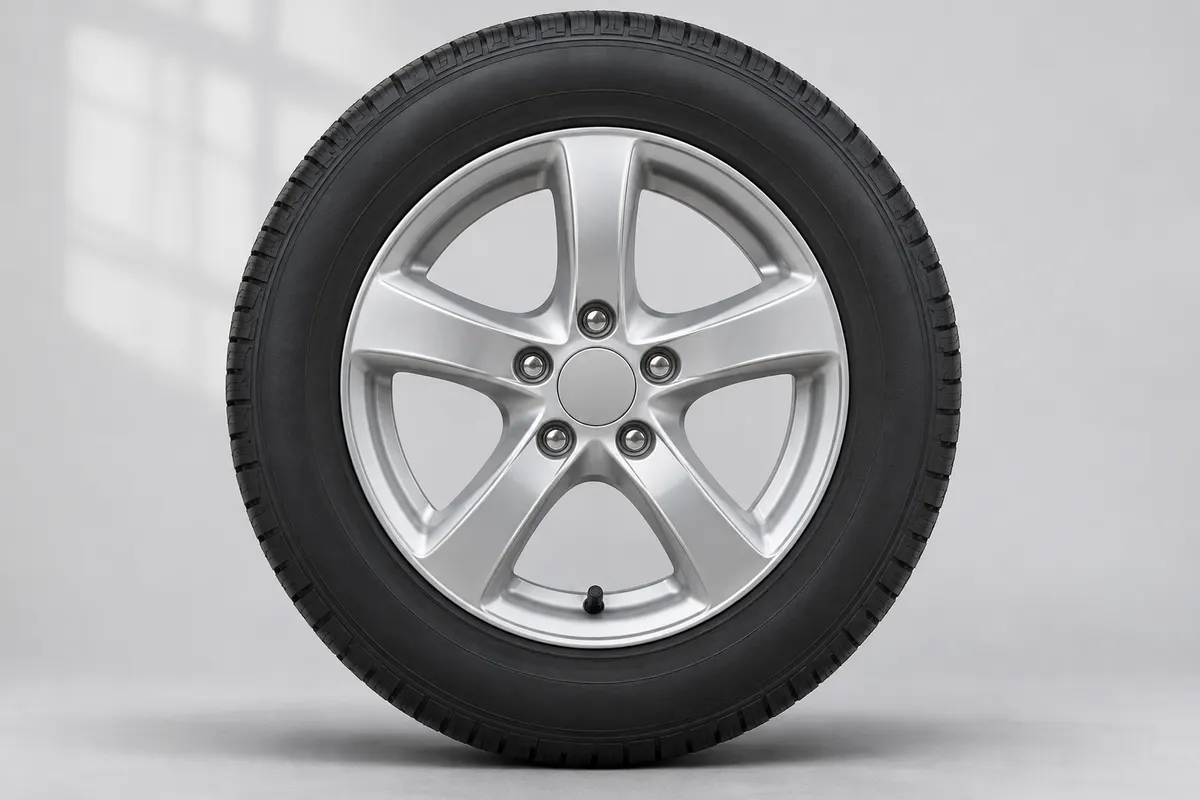
A Bridgestone run-flat tyre has reinforced, self-supporting sidewalls that hold up the car's weight when the tyre loses air, so you can keep driving to a safe place or a fitter. Bridgestone markets this as Run-Flat Technology, shown as RFT on the sidewall.
With a normal tyre, a puncture at speed means the sidewall folds under the rim within seconds. With an RFT, the stiff sidewall carries the load and steering stays controllable. Bridgestone states a typical range of around 80 km at up to 80 km/h, but your car's handbook has the final word because load and temperature change it.
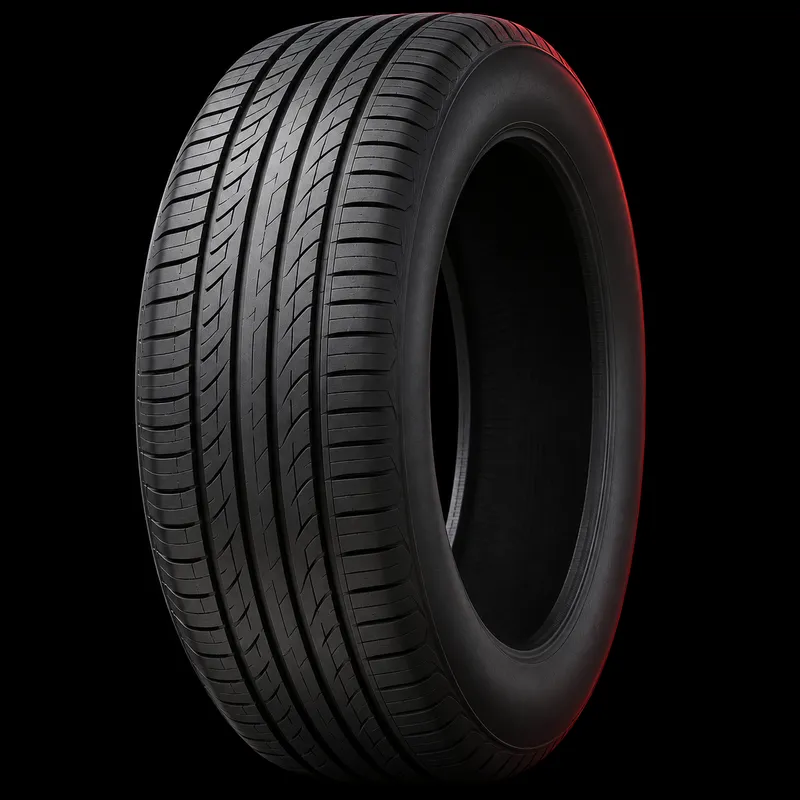
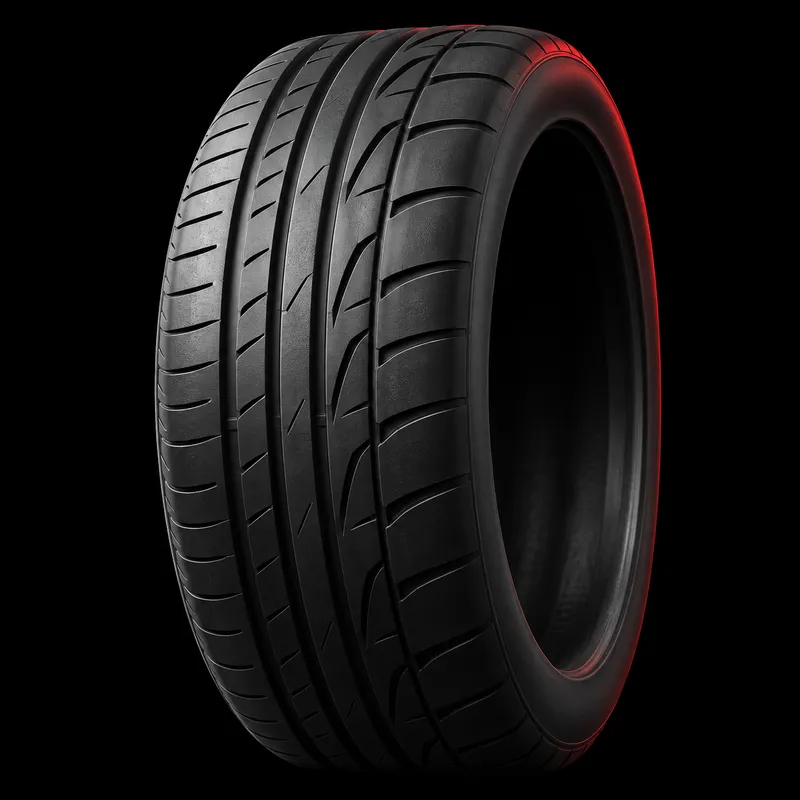
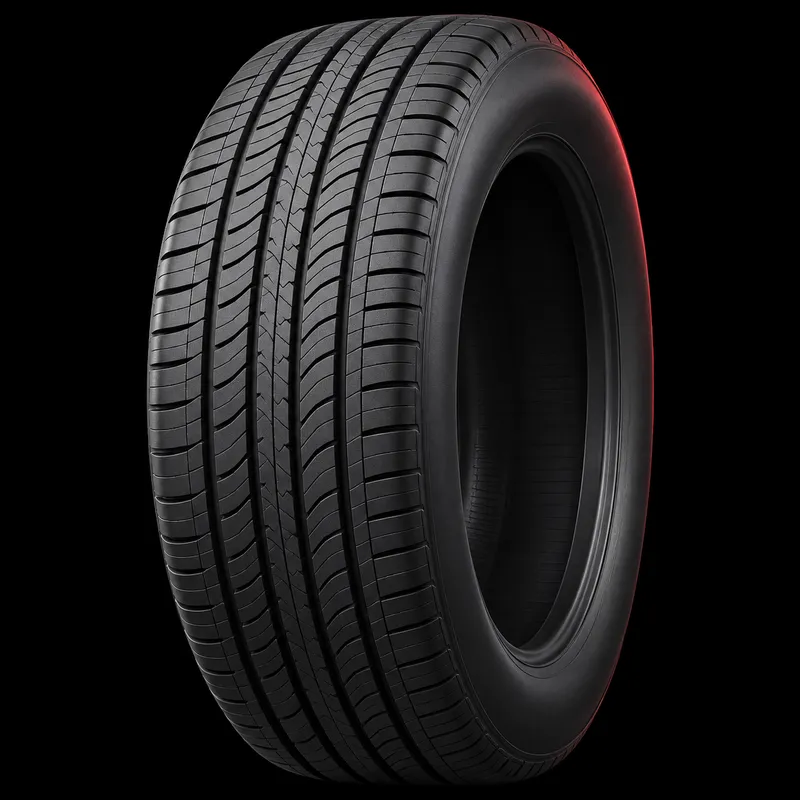
RFT versions exist of several Bridgestone patterns in selected sizes, including the Potenza S001, Turanza T005 and Alenza 001. The Bridgestone run-flat tyres Dubai page lists what we can supply.
What is the difference between RFT and DriveGuard?
RFT tyres are designed for cars engineered from the factory around run-flats, while Bridgestone DriveGuard is a run-flat tyre made for ordinary passenger cars that were sold on conventional tyres. Both give roughly 80 km of range at up to 80 km/h after a puncture.
Cars built for RFT have suspension tuned for the stiffer sidewall and usually no spare wheel. DriveGuard was developed so that drivers of everyday sedans and hatchbacks can get the same peace of mind on standard wheels, provided the car has a TPMS.
DriveGuard sits in the Turanza family and is aimed at comfort, so it rides more like a touring tyre than many earlier run-flats. In the UAE, availability is mainly in common sedan sizes from 15 to 18 inches.
| Feature | RFT | DriveGuard | Conventional |
|---|---|---|---|
| Drive after puncture | Typically about 80 km at up to 80 km/h | About 80 km at up to 80 km/h | No, stop and change |
| Designed for | Cars engineered for run-flats (BMW, MINI) | Ordinary cars with TPMS | Any car with a spare or kit |
| TPMS required | Yes | Yes | Recommended |
| Repair after running flat | Generally not advised | Generally not advised | Usually not, if driven flat |
| Typical UAE price | Around AED 650–1,500 | Around AED 450–900 | Range dependent |
Which cars in the UAE need run-flat tyres?
Many BMW models sold in the UAE, most MINIs and some Mercedes-Benz models left the factory on run-flat tyres, often with no spare wheel or repair kit. If you open the boot floor and find no spare, your car was very likely designed around run-flats.
On BMWs, look for RFT on the sidewall and a star symbol, which marks a tyre approved by BMW for that car. Our Bridgestone tyres for BMW page lists common sizes for the 3 Series, 5 Series, X3 and X5.
MINI owners usually find run-flats on their Cooper and Countryman, and some Mercedes C-Class and E-Class cars came with them as standard or as an option. The Bridgestone tyres for MINI page shows the typical sizes.
Why do run-flat tyres need TPMS?
Run-flat tyres need a tyre pressure monitoring system because the reinforced sidewall hides air loss so well that most drivers cannot feel it. Without a warning, you could keep driving at 120 km/h on a flat tyre and destroy it, and the 80 km range would be used up without you knowing.
That is why carmakers fit TPMS to every run-flat car and why Bridgestone specifies a working TPMS for DriveGuard. When the light comes on, slow to 80 km/h or less and head for a safe stop or call a fitter.
In UAE heat, TPMS sensors age and batteries fade, typically after several years. If your warning light is permanently on or flickers, get the sensors checked; our TPMS sensor replacement service covers diagnosis and new sensors.
Can you repair a run-flat tyre?
Most tyre and car makers advise against repairing a run-flat tyre that has been driven while deflated, because the sidewall can be damaged internally in ways you cannot see from outside. Policies differ between carmakers, and some allow a standard tread repair if the tyre lost little pressure and was not run flat.
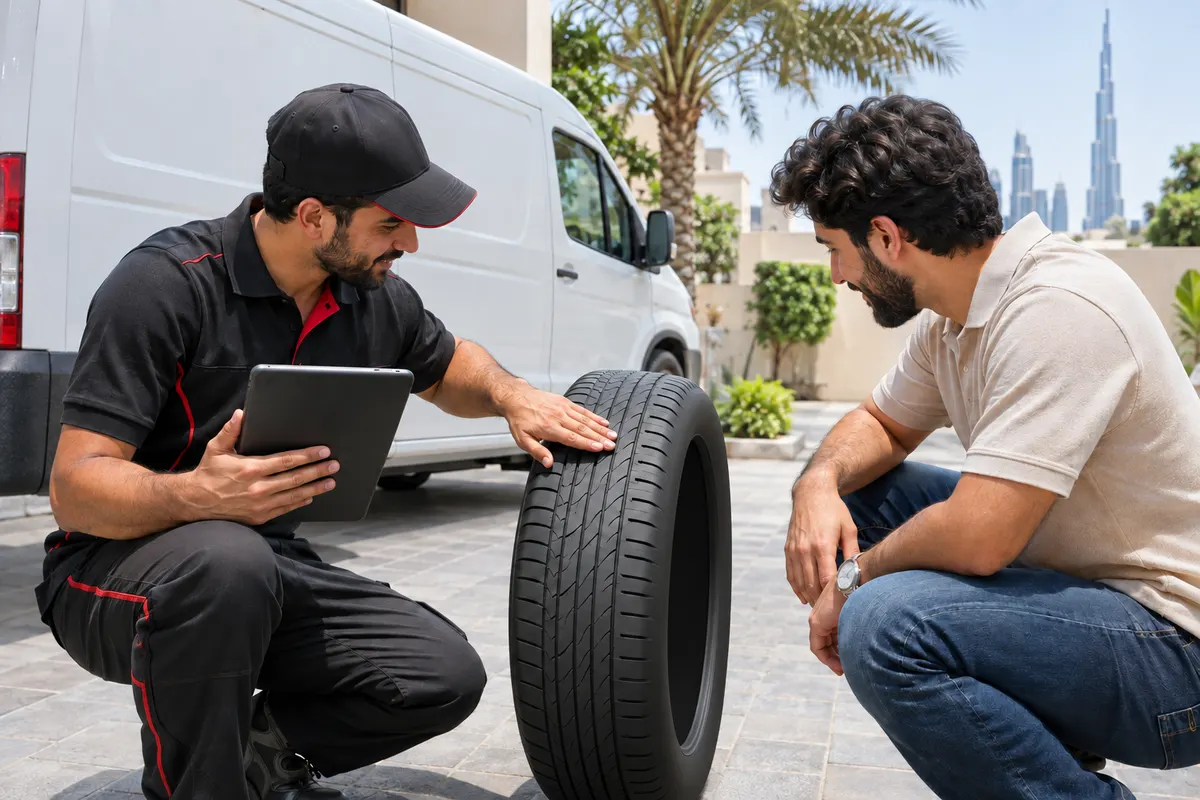
On the vans, my approach is cautious. If the TPMS caught the leak early, the hole is a clean nail in the central tread, and the inside of the tyre shows no rubbing, crumbs or discolouration, a repair may be possible within the carmaker's rules. If the tyre has been run flat for any distance, I replace it.
I will always show you the inside of the tyre and explain the decision. A puncture repair on a run-flat is never done as a plug from outside; it needs the tyre off the rim and a proper internal patch.
What does fitting a run-flat tyre involve?
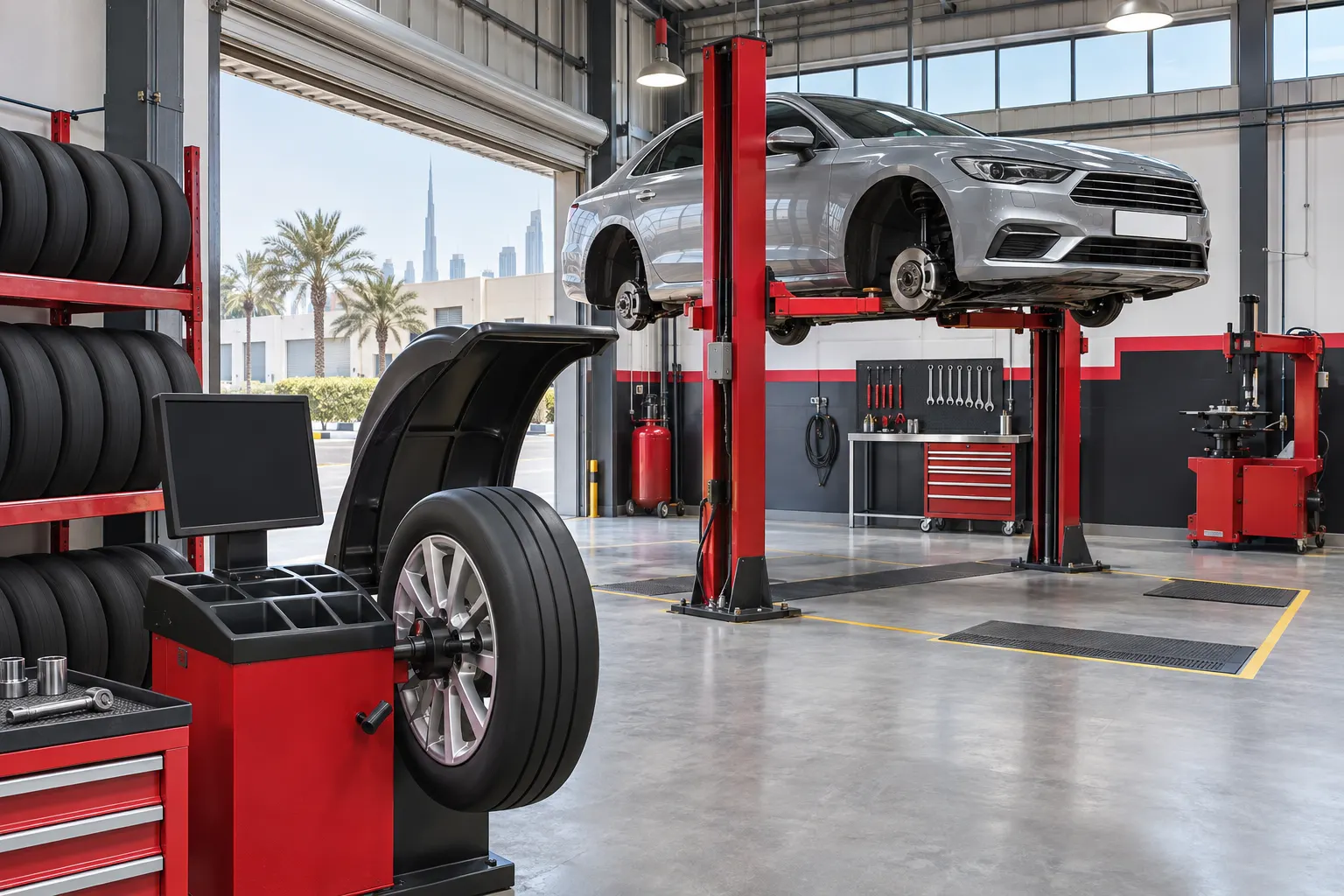
Fitting a run-flat tyre needs a tyre machine with enough force and the right technique, because the stiff sidewall resists mounting and can damage the bead or the TPMS sensor if handled carelessly. Our vans carry equipment set up for RFT and low-profile tyres.
The technician positions the valve-mounted TPMS sensor correctly before breaking the bead, lubricates the bead well, and balances each wheel on the van afterwards. Some performance cars also need specific wheel nut torque and, on BMWs, a TPMS reset through the car's menu.
We show you the DOT date before fitting, set pressures to the door placard and dispose of the old tyres. For other tyre types and sizes, our Bridgestone tyre size guide explains every marking on the sidewall, including RFT and the load index.
Can you replace run-flats with normal tyres?
You can replace run-flats with conventional tyres on most cars, but you then need a spare wheel or an inflator kit, and you lose the ability to drive on after a puncture. Many BMW and MINI owners consider it for a softer ride.
The trade-offs are real. The car's suspension was tuned for run-flats, so steering feel changes slightly, and you must carry a way to deal with a flat because there is no spare well. Never mix run-flat and conventional tyres on the same axle.
If ride comfort is the goal, a modern RFT such as the Potenza S001 RFT or a Turanza run-flat is far more comfortable than the early run-flats many people remember. For drivers who want the sporty side, the Potenza line covers performance sizes up to 22 inches.
How much do Bridgestone run-flat tyres cost in the UAE?
Bridgestone run-flat tyres in the UAE typically cost from around AED 450 for a 16-inch DriveGuard up to around AED 1,500 for a large Alenza 001 RFT on a BMW X5. They sit at the upper end of each range's price band because of the reinforced construction.
As a guide, a 17-inch Turanza run-flat for a BMW 3 Series is often around AED 650–800, an 18-inch Potenza S001 RFT around AED 900–1,100, and a 20-inch Alenza 001 RFT for an X5 around AED 1,200–1,500. Exact prices depend on size, stock and DOT date, and we confirm them on WhatsApp.
Mobile fitting starts from AED 100 per visit, and run-flats are fitted on the van at your home, office or car park like any other tyre. Mercedes owners can check sizes on the Bridgestone tyres for Mercedes-Benz page.